Walk into any professional nail studio and you will likely see an electric file on the desk. Look closer, and you will notice a small abrasive sleeve attached to the mandrel—a mini sanding band. While traditional hand files are still in every kit, many nail technicians reach for the mini sanding band first. The reason is not that files are obsolete. It is that mini sanding bands solve specific problems faster, more precisely, and more hygienically than a hand file can.
Here is why nail techs prefer mini sanding bands, and where a traditional file still has its place.
Speed and Efficiency
The most obvious advantage is speed. A hand file does the work through repeated physical strokes. A mini sanding band on an electric file rotates at a controlled speed and removes material quickly. For filing down a lifted edge, thinning product near the cuticle, or smoothing a small area, the e-file with a mini band takes seconds instead of minutes.
This speed matters in a busy salon. A technician may perform several services a day. Saving a few minutes on each nail adds up. It also reduces the physical effort required from the technician’s hand and wrist. Less repetitive motion means less fatigue and less risk of overuse strain.
Precision in Small Areas
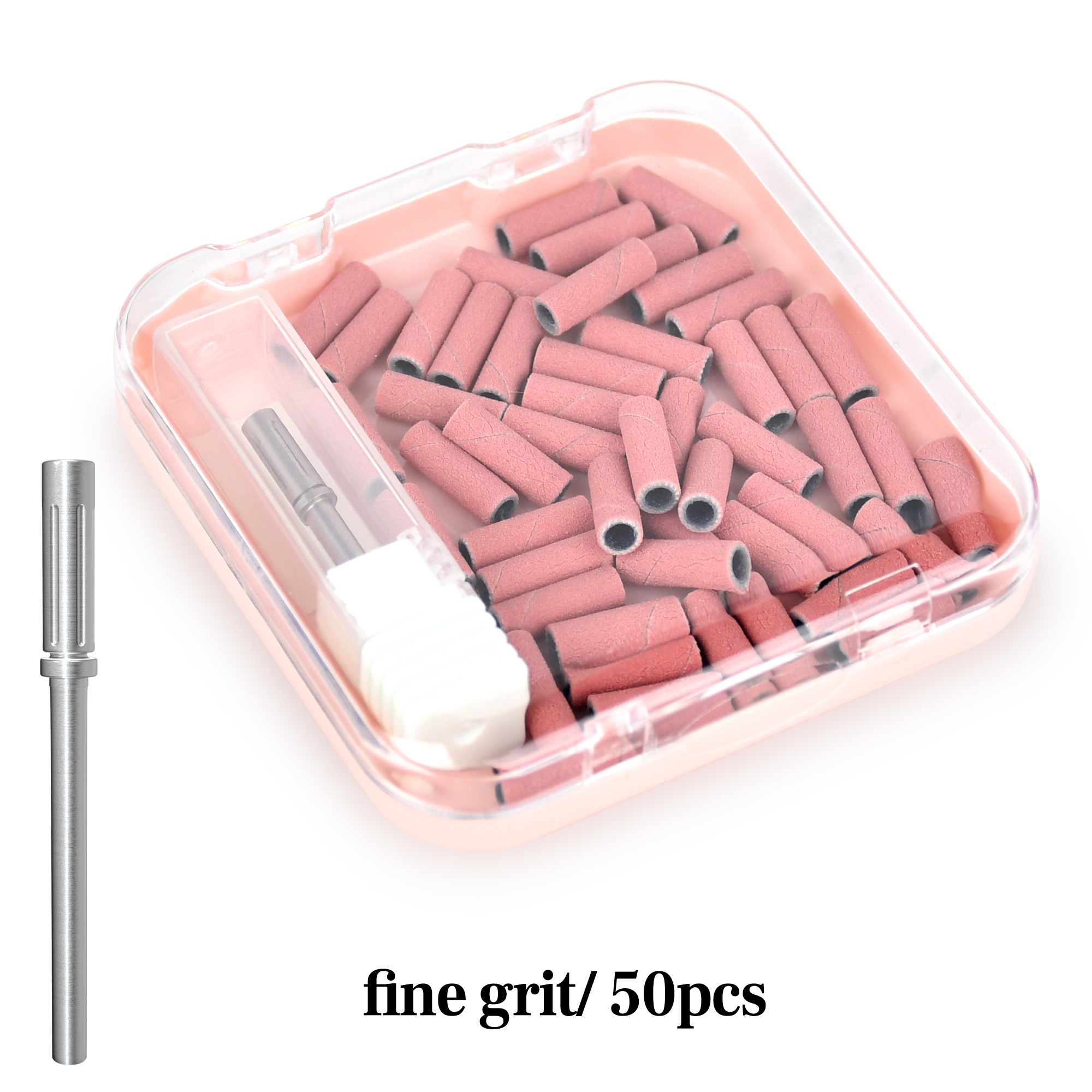
The biggest practical advantage is access. A mini sanding band is narrower than a standard band, usually around eight to nine millimeters wide. That small diameter allows the technician to work around the cuticle, the sidewalls, and the corners of the nail plate without touching the skin. A full-size file is too wide for these areas. A hand file can reach them, but the risk of accidentally filing the skin or the sidewall is higher.
For small nail beds, narrow nails, and detailed refinement, mini bands are simply more controllable. They allow the technician to target a specific spot instead of filing the whole nail. This is especially useful during prep, when dead cuticle tissue needs to be cleaned from the nail plate without thinning the natural nail.
Consistency and Control
A hand file depends on pressure, angle, and speed—all controlled by the technician’s hand. Even skilled technicians can create slight unevenness, especially on the sidewalls. A mini sanding band, used at a low speed with light pressure, provides a more consistent abrasion. The rotation is steady, and the small surface area gives better feedback. The technician can see exactly where the band is contacting the nail and adjust immediately.
Control is also about heat. A hand file does not generate heat. An e-file can, but a mini sanding band used correctly—low speed, light pressure, constant motion—generates less heat than a coarse bit or a larger band. The narrow band stays cool more easily and is more forgiving near the nail bed. For technicians who work on natural nails, this control is essential.
Hygiene and Disposability
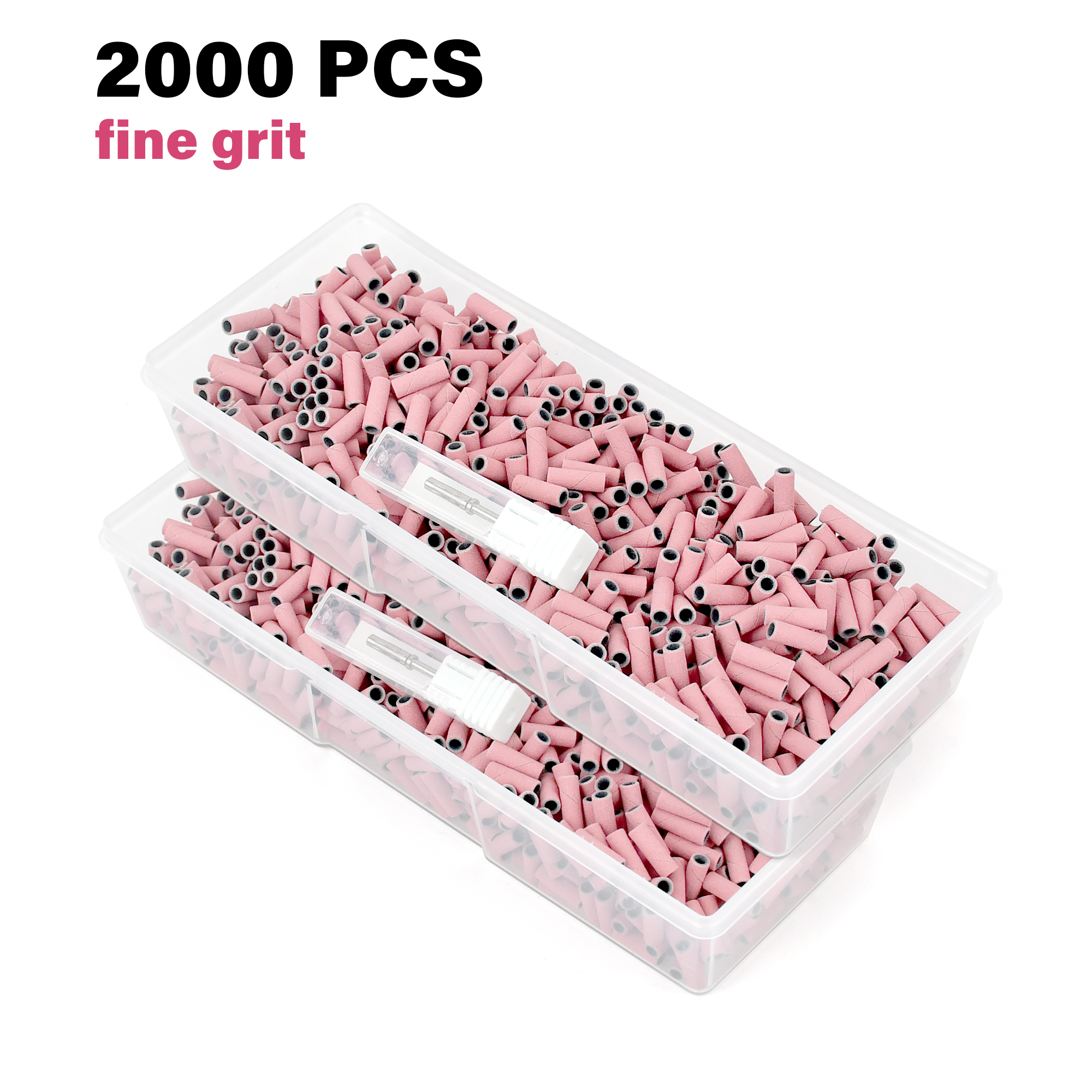
Mini sanding bands are disposable. A technician uses one band per client or per service and then discards it. This eliminates cross-contamination. Traditional nail files, by contrast, are porous and cannot be fully sterilized. Reusable metal files exist, but they require cleaning and disinfection, and they can still trap debris. A fresh mini band is simple, hygienic, and reassuring to clients.
In a professional setting, disposability also saves time. There is no scrubbing, soaking, or sterilizing a band. The technician simply removes it and throws it away. This is part of the reason mini bands are favored for detailed work: they are both precise and clean.
Versatility Across Grits and Tasks
Mini sanding bands come in a range of grits. A fine grit, around 180 to 240, is safe for natural nail prep and delicate finishing. A medium grit, around 120 to 150, is useful for refining artificial product and removing gel polish. A coarse grit, around 80 to 100, is for heavy product removal on acrylics or hard gels. The technician can switch grits by changing the band, without changing the entire tool.
This versatility makes mini bands useful for many tasks: cleaning lifted edges, smoothing cracks, blending repairs, thinning product near the cuticle, refining the sidewalls, and preparing the nail plate before application. A single hand file cannot match this range of functions, and a set of hand files takes up more space and requires more organization.
Reduced Hand Fatigue
Nail technicians use their hands constantly. Repetitive filing with a hand file can cause strain in the fingers, wrist, and forearm. An e-file with a mini band does the mechanical work, allowing the technician to guide the tool rather than power the stroke. This reduces fatigue over a long day and helps prevent occupational hand and wrist problems.
The lightweight nature of a mini band and mandrel also contributes. The tool is small, the band is light, and the movement is controlled. Technicians who perform detailed work for hours at a time notice the difference.
Where a Traditional File Still Wins
It would be inaccurate to say mini sanding bands replace every hand file. Traditional files still have important uses.
They are better for shaping the free edge of natural nails, especially when the technician wants maximum control. They are simpler for beginners who are not yet comfortable with an e-file. They require no electricity, no maintenance, and no learning curve. They are also safer for anyone who is not trained in e-file use. For a quick touch-up or a simple shape, a fine-grit file is often all that is needed.
Many technicians use both. A hand file for shaping and finishing the free edge, and a mini sanding band for detail work, cuticle-area cleaning, and product refinement. The two tools complement each other.
Final Thoughts
Mini sanding bands are preferred by many nail technicians because they are fast, precise, hygienic, and versatile. They reach areas a hand file cannot access easily, they reduce hand fatigue, and they provide consistent control when used at the right speed and pressure. They are not a replacement for every file, and they require training to use safely. But for detailed prep, repair, and refinement, they have become an essential tool in the professional nail kit. The hand file is still useful. The mini sanding band is simply better at certain jobs.
Read also: Nude Nails: Why They’re the Most Sophisticated Manicure
